Estahban · Fars · Iran
A city that builta fig paradise by hand.
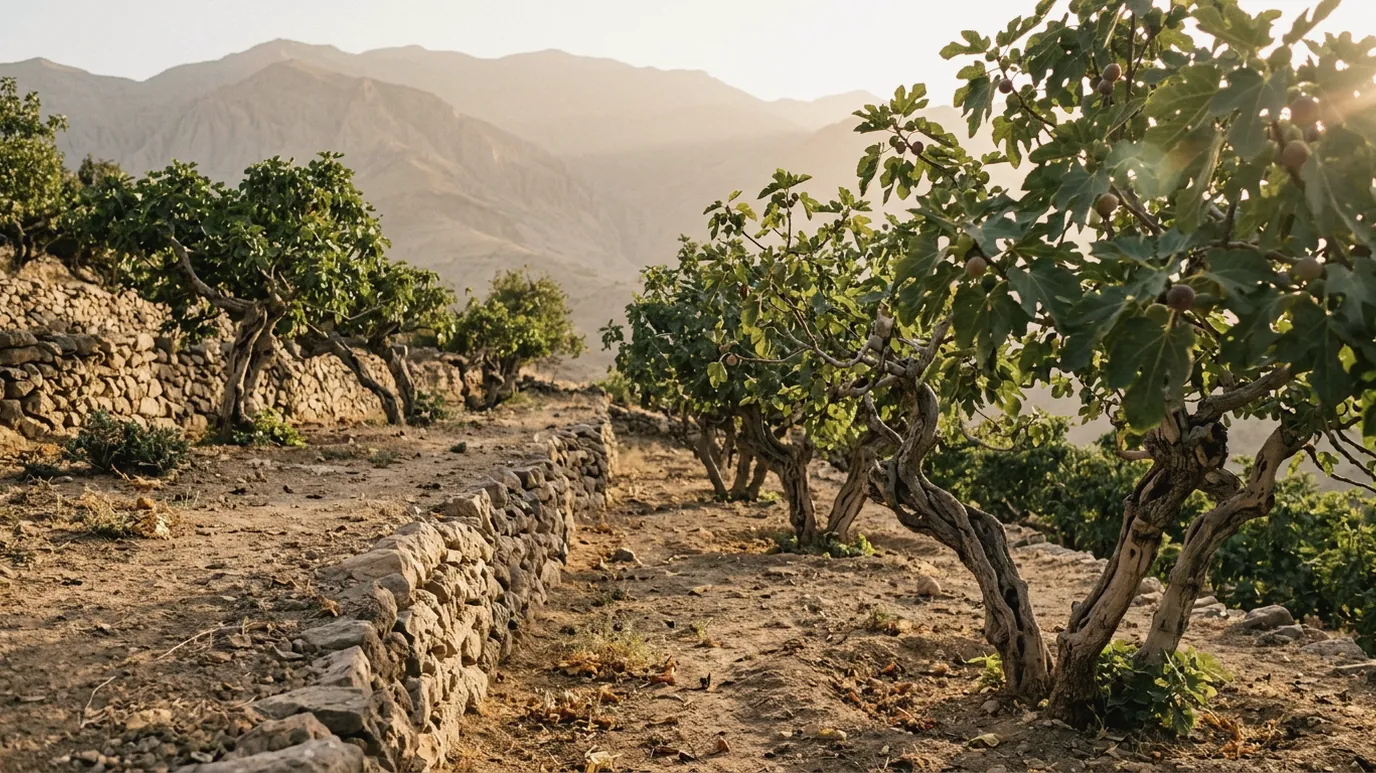
At the foot of the Zagros, where water is scarce and the sun is generous, generations of patience have built an orchard that sweetened the world's table.
The Estahban story
The land's story
Long before honey reaches a jar, Estahban has already made it in its orchards.
Estahban is a place you learn with dusty feet — shoes that carry the grit of sloping lanes home, hands that have known fig bark for years. Here the orchards rose out of stone, not out of easy green.
At nearly 1,750 metres, summers are thirsty and winters cold. That very harshness deepens the taste: the fig ripening in this soil draws its sweetness from sun and patience, and the honey born of these blossoms carries an earthy, herbal perfume found nowhere else.
«Every orchard you see began with someone who, in a hard year, chose not to leave — who planted, and stayed.»
- 1,750 m
- Above sea level
- 20,000 ha
- Hand-built fig orchards
- 40+
- Nectar-bearing species
- Autumn
- Season of red gold
Chapter one · The fig
An orchard no machine ever planted.
The Estahban fig groves do not look like fields; they look like a work built layer upon layer by generations. The trees sit on terraces walled with the stones of the same ground, fed by qanats and narrow channels.
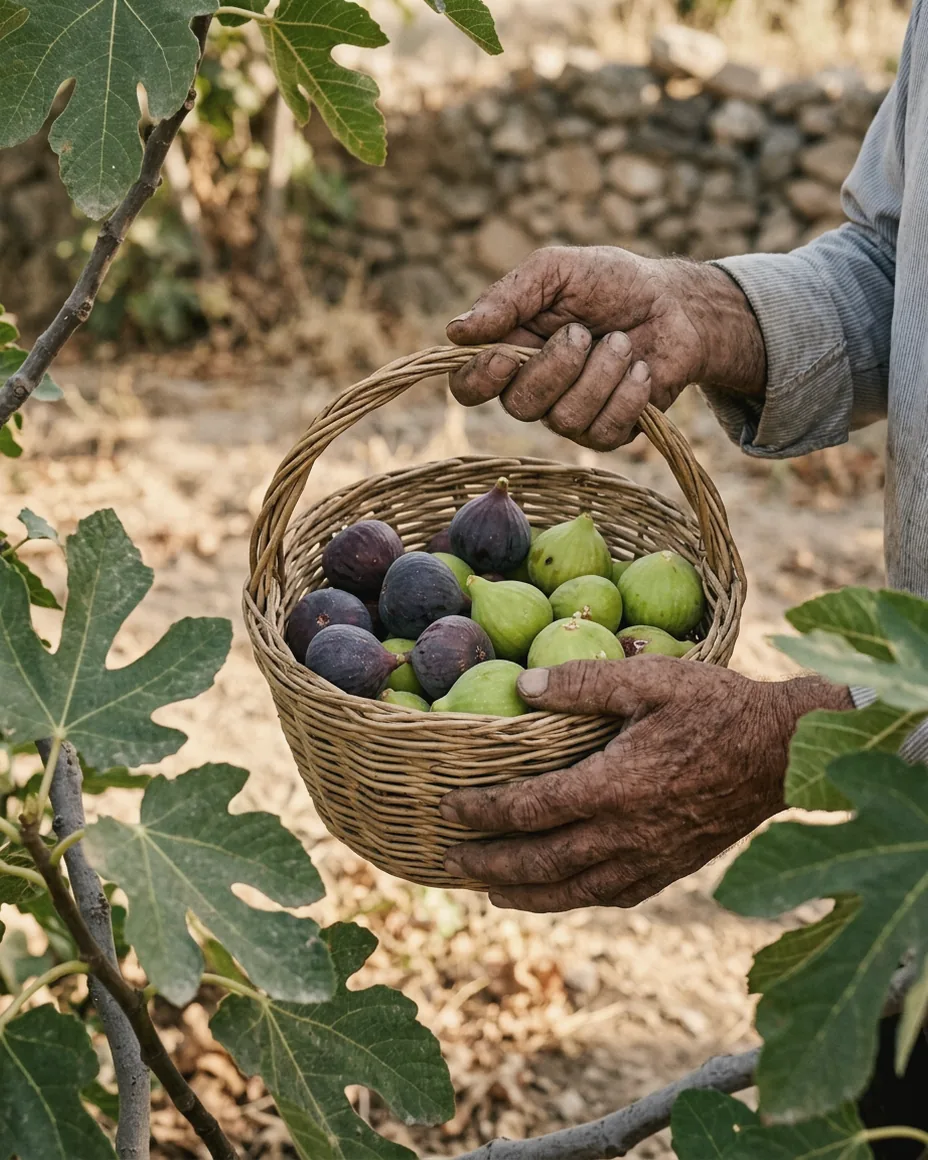
They say it is the largest hand-built fig orchard in the world — but the number is not the whole truth. The truth is that every tree carries the name of a year, and every grove the memory of a family. Estahban figs are picked by hand, dried by hand, and brought to the table with the same respect the farmer holds for the land.
Chapter two · Saffron
Red gold, waking from the soil.
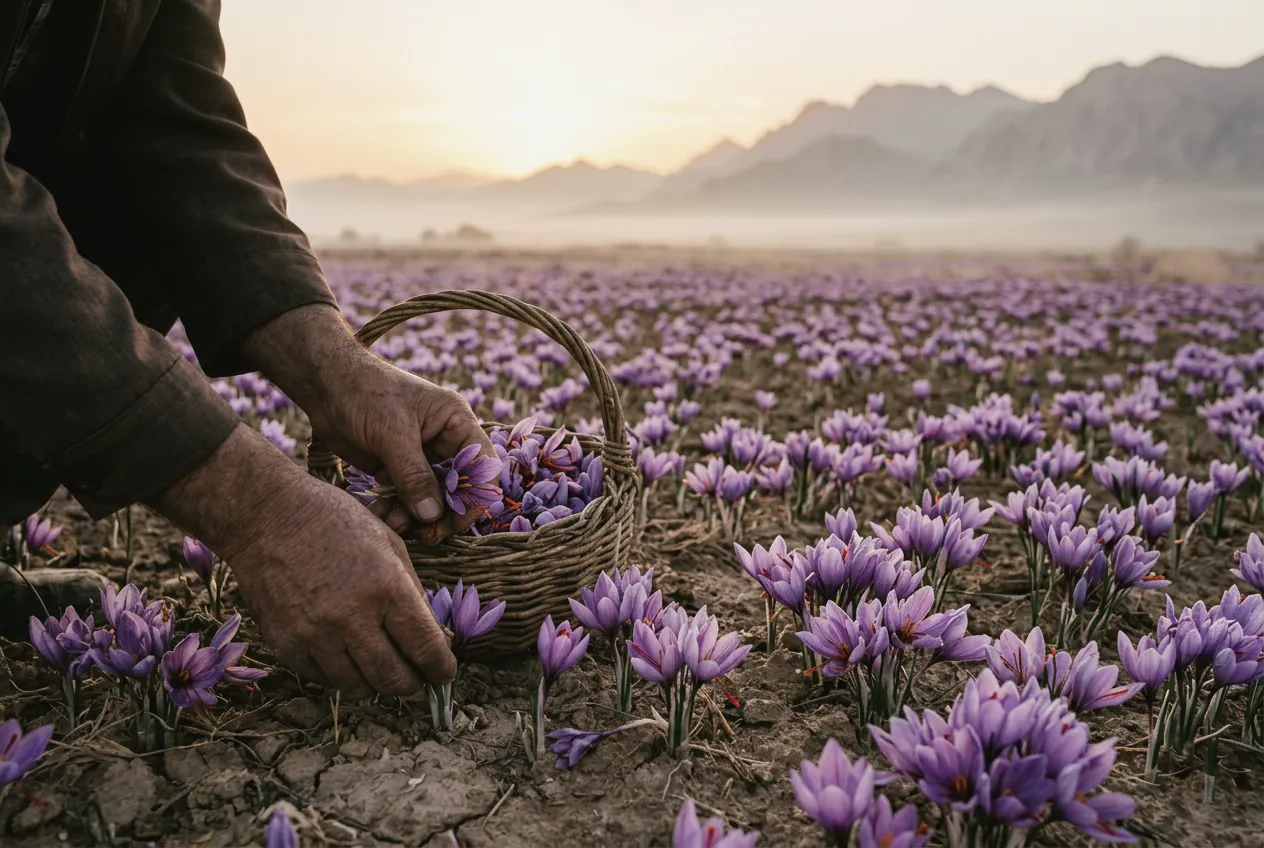
When autumn arrives, the ground puts on purple. Saffron blooms in the coldest days of the season's start, and each flower has only a few hours. Whoever plants saffron knows they must rise before the sun and draw the red threads from the heart of the flower with their fingers.
That small act is repeated a thousand times for a single measure of gold. Estahban saffron is made of that repetition — of patience, precision, and the respect this town holds for delicate work.
Chapter three · The bee
Bees, the orchard's oldest neighbours.
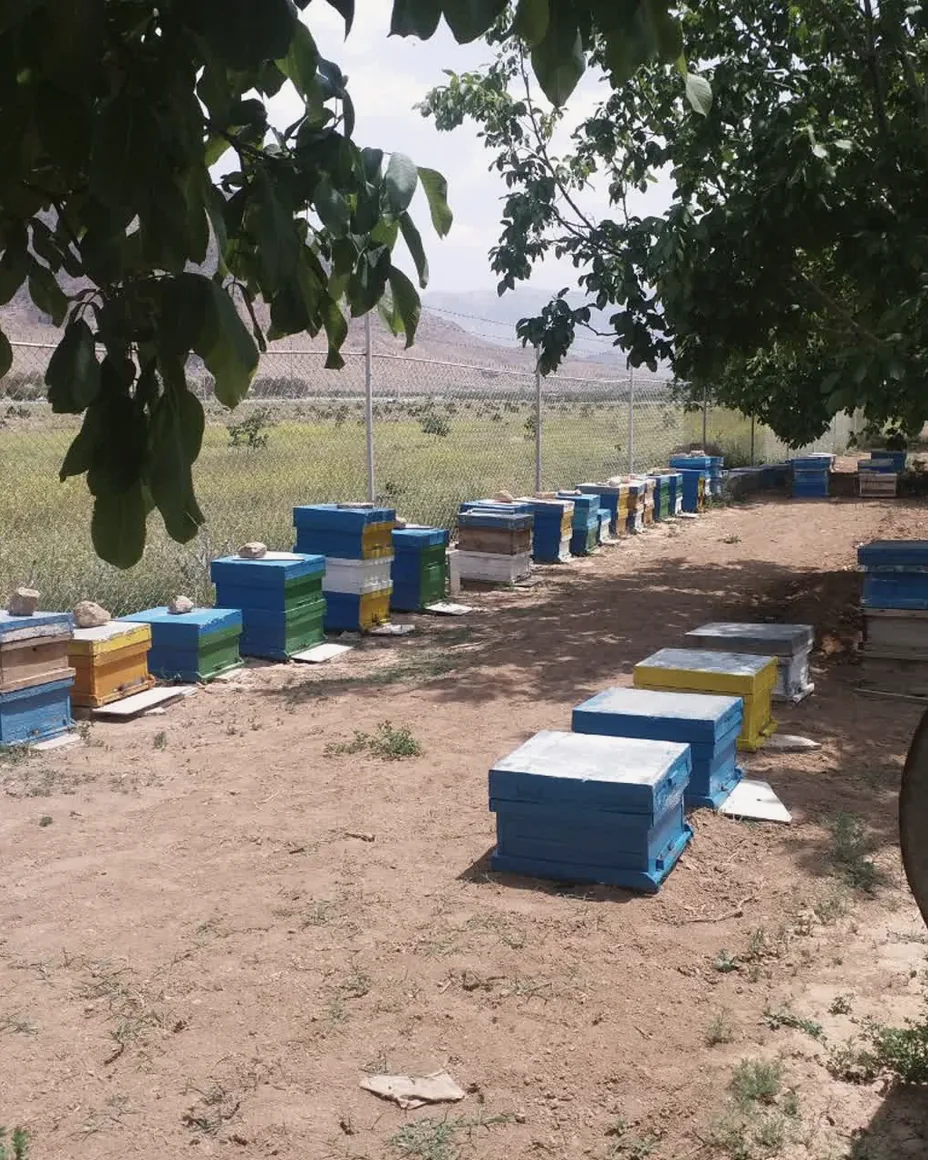
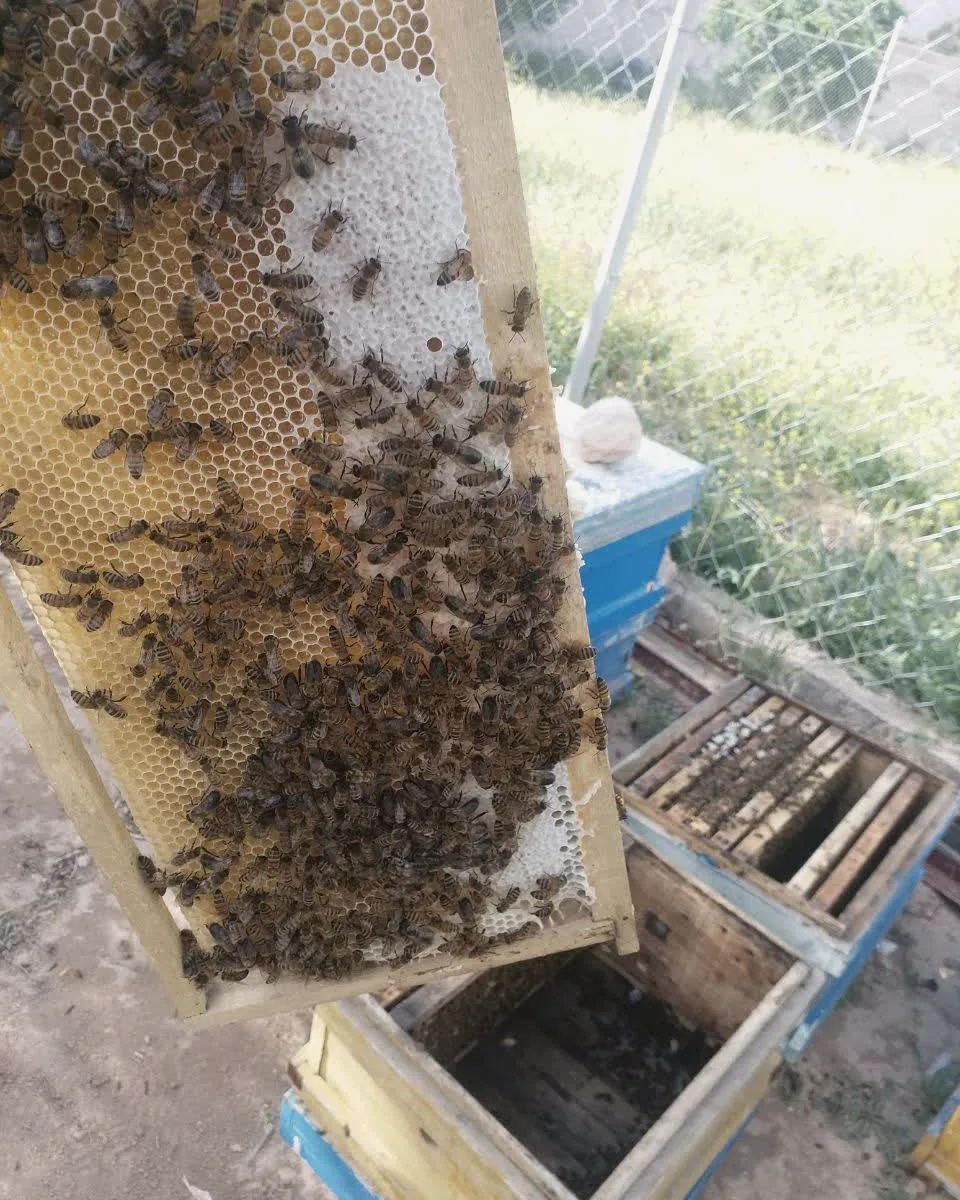
The apiaries of Estahban sit at the edge of these orchards and slopes, where bees can draw nectar from fig, saffron, mountain herbs and wild blossom. The hives move with the flowering of the lanes and gardens, not with a factory calendar.
Be'Shahd honey comes from this neighbourhood: from hives kept in the shade of trees, from a cold harvest, and from the belief that good honey should not be corrected — only allowed to remain as it was made.
Culture & history
A town that translated hardship into culture.
Estahban is more than a name on a map. It is the memory of people who built orchards, mosques, schools and libraries inside a mountain.
The town has deep roots — on caravan routes, in the shadow of a mountain that always made settlement possible. But what made Estahban endure is not age alone: it is its people's habit of building. Where water was scarce they dug qanats; where the soil was stony they raised terraces; where there was no road they drew narrow lanes.
The people of Estahban have been hardworking Muslims and people of culture: they built orchards with knowledge, sold their harvest with integrity, and kept the town's name through quality. The world's largest hand-built fig orchard is not only an agricultural achievement; it is living proof that faith, patience and learning can make a paradise out of stubborn soil.
01
Ancient roots
Traces of a long settled life on this flank of the Zagros, shaped by caravan routes and spring water.
02
Orchards by hand
Terraces of stone and soil, raised generation after generation without machines.
03
Culture and learning
Mosque, school and library beside the orchard; a people who joined farming with knowledge.
04
A name that stayed
Estahban figs reached markets in Iran and abroad, carrying the town's name with them.
From Estahban to your home
Take the taste of this town with you.
If this story warmed you, explore the honey harvested in Estahban or talk to us directly — we belong to this same land.